A vacuum cleaner should match the surfaces, debris, people, and storage in a home. The strongest motor or largest machine is not automatically the best. Cleaning performance depends on airflow, the floor head, filtration, maintenance, and how often the owner is willing to use the machine. Define those conditions before comparing models.
Audit the home
List each surface by approximate area: wall-to-wall carpet, area rugs, hardwood, tile, stairs, upholstery, and car interiors. Note high-pile rugs, delicate floors, narrow spaces, and thresholds. A powered brush roll can help lift debris from carpet but may scatter material on hard floors or catch fringe. Useful controls include brush-roll shutoff, height adjustment, and suction relief for lightweight rugs.
Identify the debris. Pet hair, long human hair, fine dust, cereal, fireplace ash, and tracked-in grit create different problems. Ordinary household vacuums should not collect hot ash, liquids, construction dust, or hazardous material unless specifically designed for that use. Fine renovation dust may require equipment and filters rated for the task.
Consider the users. Carry weight matters on stairs. Grip, trigger pressure, wand length, noise, and control placement affect usability. A lighter vacuum used regularly often cleans more effectively than a powerful machine that stays in a closet.
Choose a basic format
Upright vacuums combine the cleaning head and body. They can work efficiently across large carpeted areas, but weight and a bulky head may make stairs or low furniture difficult. Check whether the hose reaches without tipping the machine and whether the brush roll can be disabled.
Canister vacuums place the motor on the floor and connect it to a wand. They often maneuver well around furniture and accept specialized heads, although the canister must follow the user. Examine wheel behavior, hose length, cord management, and storage footprint.
Cordless sticks offer quick access and easy spot cleaning. Runtime varies with power mode and attachments, and advertised figures may reflect a low setting without a powered head. Check usable runtime in the configuration you expect, charging time, removable-battery availability, and performance as the bin fills.
Robotic vacuums can maintain open floors between deeper cleanings. They do not remove the need for edge, stair, upholstery, and periodic detailed cleaning. Evaluate obstacle handling, map controls, privacy settings, replacement parts, and whether the home must be rearranged before each run. Self-emptying docks reduce bin handling but add bags, floor space, and noise.
Handheld and wet/dry vacuums solve narrower jobs. A handheld can manage furniture and vehicles; a wet/dry model can collect suitable workshop debris or spills when used according to its manual. Avoid expecting one specialized format to replace every cleaner.
Look beyond power labels
Electrical wattage describes energy input, not complete cleaning performance. Airflow and suction measurements can help, but test methods differ and the floor head strongly affects results. Independent tests that use standardized debris, multiple surfaces, and a partly filled bin are more informative than one maximum number.
Sealed suction that is too strong can make a head difficult to push. Adjustable suction, vents, and height settings improve control. For carpet, examine agitation and how well the head maintains contact. For hard floors, look at pickup along edges and whether wheels or stiff brushes may mark a finish.
Hair management deserves specific attention in homes with pets or long hair. “Anti-tangle” is not absolute. Check whether the brush roll can be removed, whether end caps open, and whether wrapped hair is accessible without special tools.
Understand filtration
A filter’s efficiency matters only if air is directed through it. A high-efficiency filter in a poorly sealed body can allow particles to escape around the filter or at joints. Look for a sealed filtration pathway and clear manufacturer documentation. HEPA is a defined filtration term, but vague phrases such as “HEPA-type” do not necessarily indicate the same performance.
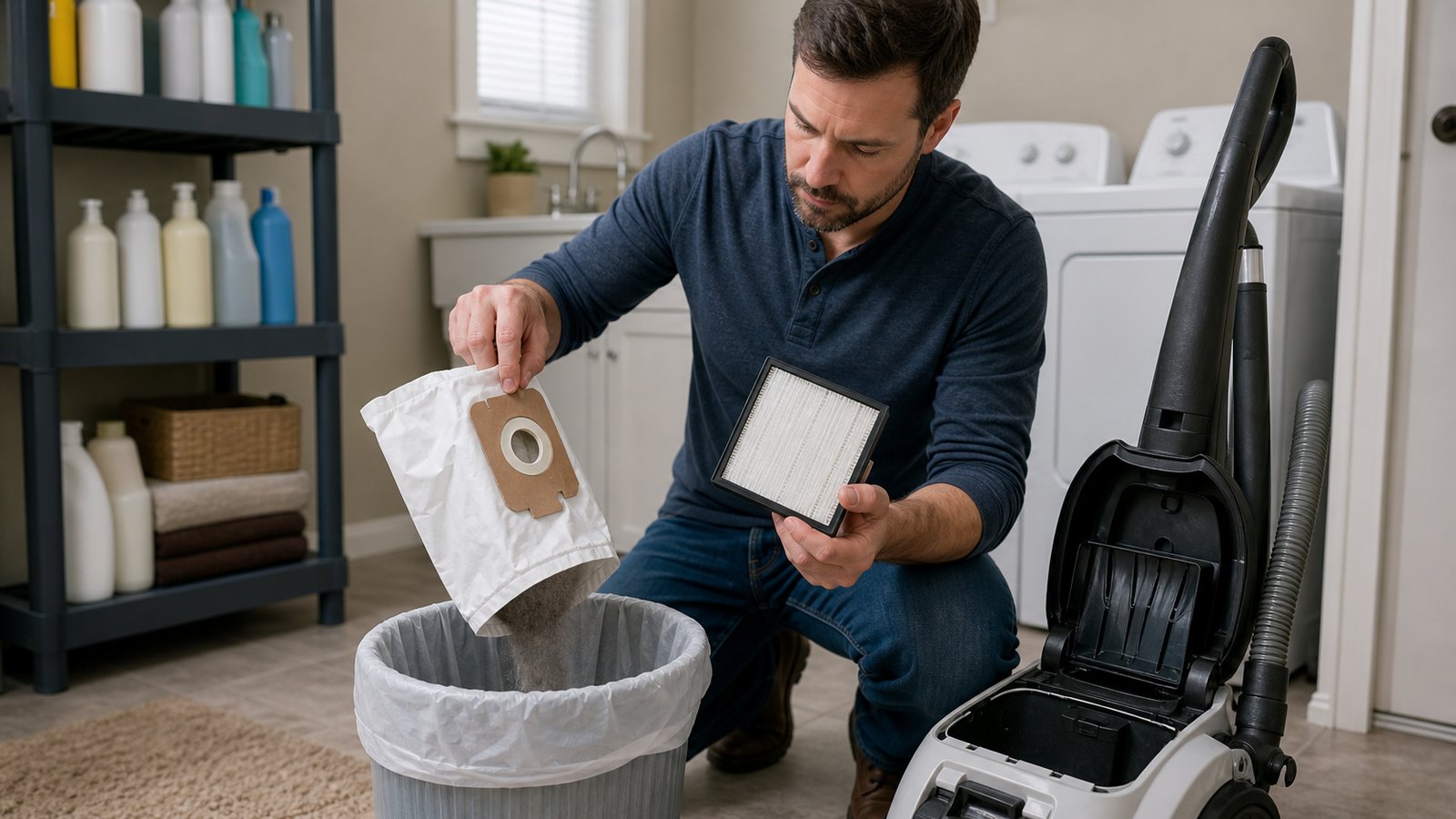
People with asthma or allergies should treat vacuuming as one part of indoor-air management, not a cure. The EPA notes that source control and ventilation are central approaches to indoor air quality. Vacuum slowly, follow filter instructions, and avoid stirring dust during bin emptying. A bagged system may reduce direct contact with collected dust; a bagless bin avoids replacement bags but often requires more handling and filter cleaning.
Check filter price, replacement interval, and wash instructions. A washable filter must dry completely before reinstallation if the manual requires it. Using a damp filter can restrict airflow or damage the machine. Never assume that a filter is washable.
Compare bins and bags
Capacity affects interruptions. Small cordless bins may need emptying during a large job, while a large upright can be cumbersome. Compare usable capacity and the fill line rather than external size. Watch how debris releases and whether hair must be pulled out by hand.
Bagged vacuums usually contain dust neatly and can maintain a straightforward disposal process, but compatible bags create an ongoing expense. Confirm that bags are widely available and identify the exact type. Bagless models expose reusable parts and may reduce consumable costs, yet filters and seals still wear.
For either system, inspect gaskets and latches. A bin or bag compartment that is not seated correctly can reduce performance. Transparent bins help reveal blockages but do not replace routine inspection of the air path.
Test reach and handling
Calculate cleaning radius from cord, hose, wand, and attachments. A long cord reduces outlet changes, but storage and rewind quality matter. Cordless models remove the cord while adding battery weight. Test steering around table legs, backward pulling, transitions between surfaces, and the ability to lie flat under furniture.
For stairs, determine whether the vacuum can rest securely or be carried with one hand. Do not stretch a hose so far that the body can fall. A powered miniature head may help upholstery and stairs, but it adds maintenance. Check that crevice and dusting tools attach securely and can be stored.
Noise specifications are useful only when the measurement method is stated. Try the vacuum in person when sound sensitivity, pets, neighbors, or sleeping children are concerns.
Plan maintenance and ownership cost
Read the maintenance section of the manual before purchasing. Common work includes emptying the bin, changing bags, cleaning or replacing filters, cutting hair from the brush, clearing clogs, and inspecting belts. Note which tasks require tools and whether dirty parts can be washed.
Price replacement bags, filters, belts, brush rolls, batteries, and specialty heads. Verify parts availability from the manufacturer or established service channels. A low initial price can be offset by scarce consumables or a battery that cannot be replaced.
Compare warranty length, covered components, labor, shipping, and exclusions. Commercial use, blockages, worn brushes, and consumables may be treated differently from defects. Keep proof of purchase and record the model and serial number.
Use a practical trial
If returns permit, test the machine on every important surface with realistic debris. Begin with a clean bin, correct settings, and installed filters. Evaluate pickup in forward and backward passes, edge cleaning, hair wrapping, exhaust odor, heat, noise, and effort. For cordless machines, time a normal cleaning session using the powered head.
Check the floor manufacturer’s care guidance, especially for delicate wood, handmade rugs, and high-pile carpet. The wrong brush or wheel can cause damage even when pickup is excellent.
The best choice is the vacuum that removes the home’s typical debris from its actual surfaces, contains dust appropriately, fits the user, and can be maintained affordably. Format, filtration, and specifications are tools for that decision—not substitutes for it.