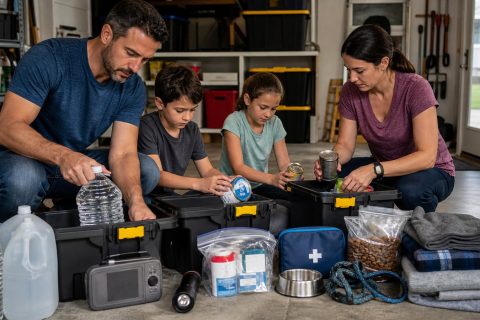
A first-aid kit is useful only when its supplies match the setting, users can find them quickly, and someone knows what to do. A sealed commercial kit can be a good start, but it may contain too few gloves, unfamiliar dressings, or medicines inappropriate for the household.
Build the kit around immediate care while professional help is arranged. First aid does not replace emergency medical services, diagnosis, or training. Call emergency services for life-threatening conditions and follow dispatcher instructions.
Choose the kit’s purpose and location
Most households benefit from a main home kit and smaller kits for vehicles, travel, work, or outdoor activities. The home kit can be comprehensive; portable kits must balance weight and likely hazards.
Store the main kit in a dry, temperature-controlled, clearly known location, away from young children and anyone who could misuse medicines or sharp objects. Bathrooms and vehicles often experience heat and moisture that shorten product life.
Tell household members where the kit is. Add a simple inventory inside the lid and organize supplies in labeled pouches by function.
Begin with personal protection
Protecting the responder helps prevent a second patient. Include several pairs of properly sized disposable medical gloves, preferably nonlatex if allergies are a concern. Add a CPR breathing barrier, eye protection where appropriate, hand sanitizer, and a few masks.
Gloves do not replace handwashing. Change gloves between people or tasks, and discard torn or contaminated gloves. Training should cover how to remove them without touching contaminated surfaces.
Include a small waste bag for used dressings. Blood-soaked or sharp materials may require special disposal under local rules. Never recap or casually discard a used needle.
Stock supplies for bleeding and wounds
A practical core includes adhesive bandages in several sizes, sterile gauze pads, rolled gauze, medical tape, nonstick dressings, and an elastic bandage.
Trauma supplies such as a commercial tourniquet can be lifesaving for severe bleeding, but only if the product is legitimate, immediately accessible, and users are trained. Do not rely on an improvised or unfamiliar device.
Avoid cotton balls directly on open wounds because fibers can remain. Do not pour harsh chemicals into a wound. Serious bleeding, deep punctures, bites, contaminated wounds, embedded objects, loss of sensation, or wounds that gape require professional evaluation.
Add tools for common injuries
Include blunt-tip scissors, tweezers, safety pins, a digital thermometer, instant cold packs, and a small flashlight. A splinting material may be useful when paired with training. A triangular bandage can support an arm or secure dressings.
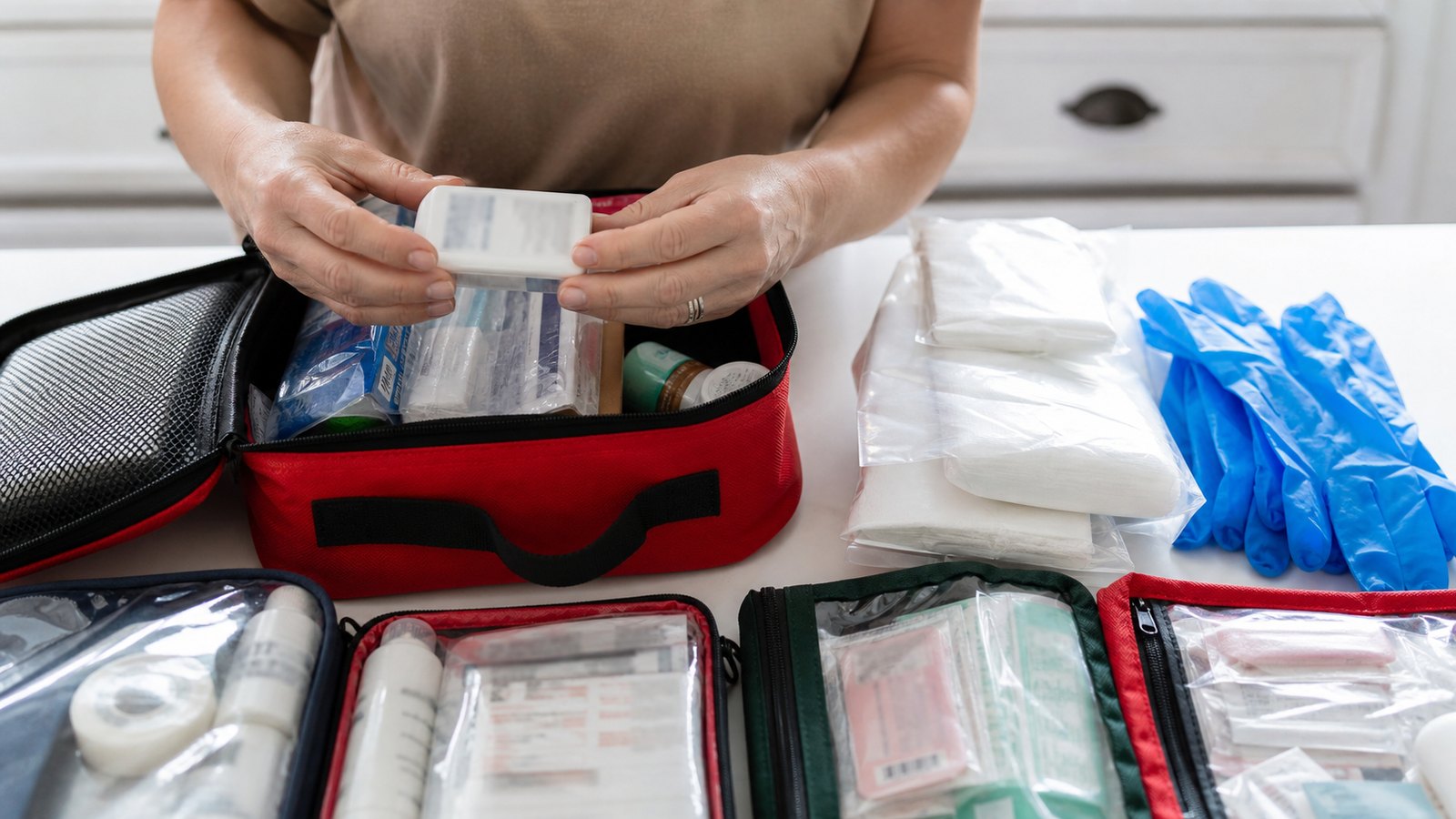
Check tool quality before storing. Scissors should cut the gauze and tape in the kit. Tweezers should align. Batteries should be protected from leakage and checked regularly.
A first-aid reference card should use current, reputable guidance. Laminated quick steps are helpful under stress, but skills are better learned through hands-on first-aid and CPR training.
Decide carefully about medicines
A kit may include nonprescription pain relievers, an antihistamine, or other household medicines, but selection requires attention to age, pregnancy, allergies, medical conditions, interactions, dosing, and storage. Keep products in original packaging with readable labels and measuring devices.
Do not share prescription medicine or store loose unidentified pills. Aspirin has special cautions, including use in children and teenagers and in people with certain bleeding risks. Acetaminophen can appear in multiple combination products, creating accidental overdose risk. Nonsteroidal anti-inflammatory drugs are not appropriate for everyone. Ask a pharmacist or clinician to help design the medicine section.
If a person has prescribed emergency medicine, such as epinephrine or rescue inhalers, incorporate it into a personal emergency plan.
Post the Poison Control number, 1-800-222-1222 in the United States, and use Poison.org for official guidance. Do not induce vomiting unless instructed by a qualified professional.
Customize for the household
Add allergy information, emergency contacts, medication lists, and relevant medical conditions in a protected card. Include hearing-aid batteries, glucose supplies, spare glasses, menstrual products, child-sized bandages, or other daily needs.
For infants and children, supplies and medicine doses differ from adults. Use age-appropriate products and dosing devices. Childproof packaging is not childproof storage.
Outdoor kits may need blister care, insect protection, sun protection, an emergency blanket, and extra irrigation water. Travel kits may need destination-specific supplies recommended by a travel-health professional.
Pets need a separate veterinary first-aid kit and guidance. Human medicines can be toxic to animals; consult a veterinarian.
Organize for fast retrieval
Use transparent or color-coded pouches with labels such as “bleeding,” “minor wounds,” “tools,” “medicines,” and “personal protection.” Put gloves and a barrier at the top so a responder does not dig through the kit with contaminated hands.
Separate look-alike products. Keep burn dressings away from ordinary creams and medicines. Store written instructions with the relevant device.
Attach an exterior card stating the kit’s location and last inspection date, not private medical details. A tamper seal can show that a kit was opened, but it should break easily.
Know what not to put in the kit
Remove expired, damaged, recalled, leaking, or unlabeled products. Avoid supplies no one is trained or authorized to use.
Flammable liquids, concentrated chemicals, and large oxygen cylinders require specialized storage and training. A household kit should not become a hazardous-material cabinet.
Do not assume more variety means better care. Standardized dressings and reliable quantities are often more useful than many specialty gadgets.
Create an inspection routine
Inspect home and vehicle kits at least twice a year and after every use. A practical schedule is tied to daylight-saving changes, school terms, or another household reminder.
During each review:
- Compare contents with the inventory.
- Replace used, opened, expired, or damaged supplies.
- Check seals, sterility indicators, and packaging integrity.
- Test the flashlight and thermometer.
- Inspect gloves and elastic products for heat damage.
- Update contacts and medical information.
- Review recalls and manufacturer instructions.
- Confirm that everyone can locate the kit.
Vehicle kits deserve more frequent checks in extreme heat or cold. Some medicines and adhesives should not remain in a car; follow product storage temperatures.
Dispose of medicines and sharps correctly
The FDA recommends drug take-back options as the preferred way to dispose of most unused or expired medicines. If a take-back option is not available, follow FDA instructions for the specific medicine; a limited flush list applies to certain products, while many others can be prepared for household trash. Do not guess.
Use an approved sharps container for needles and lancets and follow local disposal rules. Never place loose sharps in recycling.
Remove personal information from prescription labels before disposing of containers, while keeping the medicine identifiable until disposal.
Pair supplies with training and a plan
Take a recognized first-aid, CPR, and AED course and refresh it as recommended. Practice opening packages with gloves, finding supplies in low light, and explaining the home address to emergency dispatchers. Children old enough to help should know how to call emergency services and where to meet responders.
Keep a charged phone nearby when providing care, but do not delay urgent action to photograph an injury or search unreliable sources. Follow trained procedures and dispatcher guidance.
After an incident, document what was used, replenish immediately, and review whether the kit was easy to use. A missing pair of gloves or inaccessible key is a system problem worth correcting.
A dependable first-aid kit is modest, organized, and maintained. It supports safe action during the minutes before professional care—not an attempt to turn a household into a clinic.