Unit Pricing: The Simple Habit That Makes Price Comparisons Fair
Unit pricing expresses cost in a common unit, such as per ounce, pound, liter, sheet, tablet, or item. With matching units, you can see whether a larger container costs less, a sale changes the ranking, or a smaller pack better fits your needs.
What a unit price tells you
A product’s item price is the amount charged for the whole package. Its unit price is the item price divided by the package’s stated quantity. The basic formula is:
Unit price = package price ÷ package quantity
Many stores calculate this figure on shelf labels or product pages. When they do, first check the unit printed beside the number. A lower figure per ounce cannot be compared directly with a figure per pound. Convert one measurement or calculate both products using the same unit. The comparison is only meaningful when the units match.
If a label is missing, use a phone calculator. Find the current package price, identify the net quantity, and divide. Keep the calculation consistent across every option. For multipacks, use the total quantity only when each inner package is included in that total and is genuinely useful to you.
Match the unit to the way the product is sold
- Weight: Use ounces, pounds, grams, or kilograms for foods and goods sold by net weight. Compare drained weight when the liquid is not normally consumed and the package provides that information.
- Volume: Use fluid ounces, milliliters, or liters for beverages, cleaners, oils, and other liquids. Do not confuse a fluid ounce, which measures volume, with an ounce that measures weight.
- Count: Use price per item for products such as diapers, trash bags, coffee pods, capsules, razors, or light bulbs. Confirm that the pieces perform the same basic job.
- Area or length: Paper products, foil, wrap, flooring, and similar goods may be more fairly compared by square foot, meter, or another measure of coverage rather than by roll count.
- Use or dose: Concentrated products may require a second calculation based on the recommended amount per use. A smaller bottle can provide more loads if each load requires less product.
Compare like with like before trusting the result
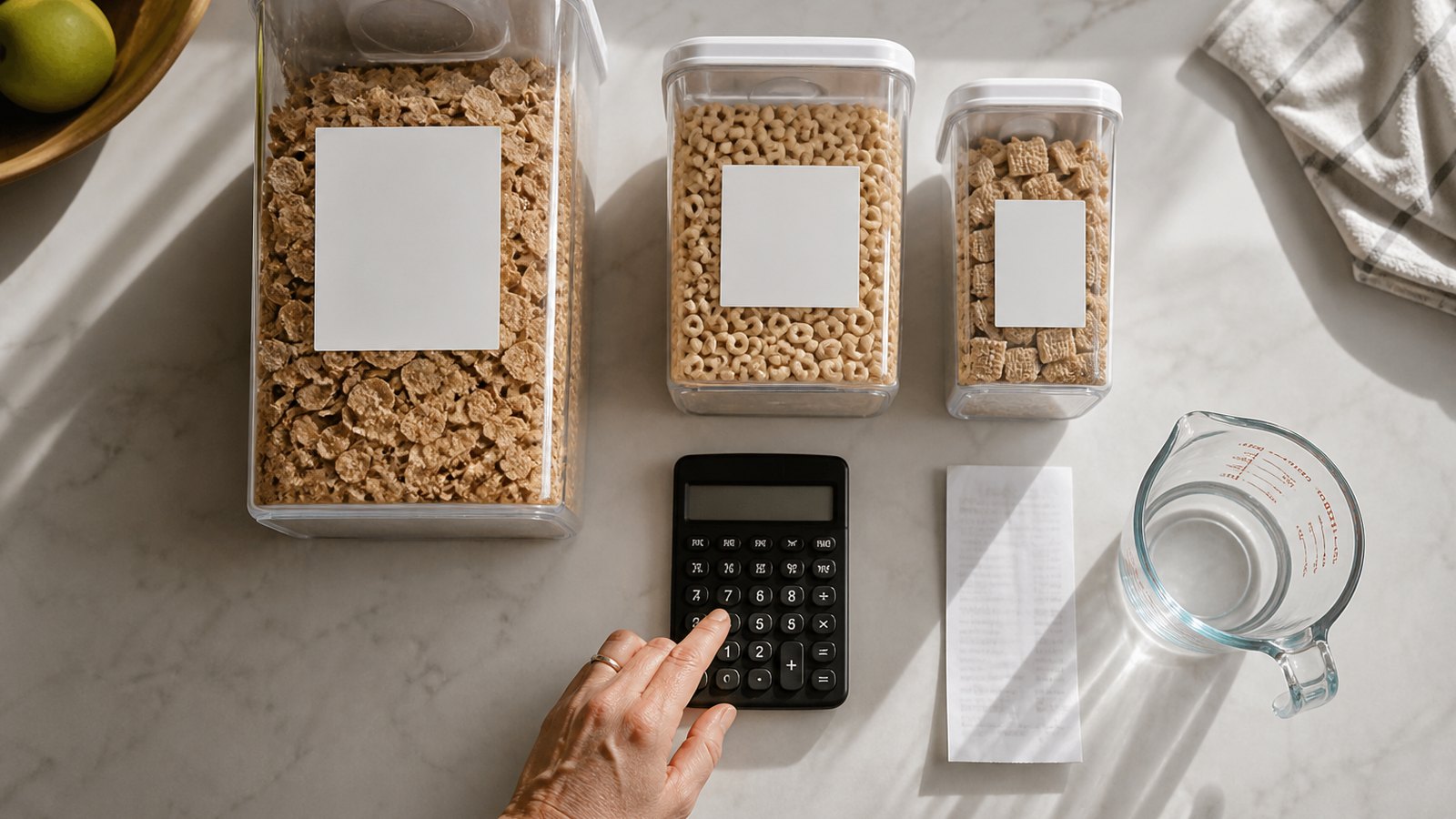
Unit pricing works best within a truly comparable group. Plain yogurt and a premium yogurt with added fruit, higher protein, or different ingredients may serve different needs. One trash bag may be thicker or sized differently. One roll of paper towels may have larger sheets or more total area. The math can show cost per unit, but it cannot decide whether the products are equivalent.
Check whether the listed quantity represents usable product. Bone-in meat, thick peels, or food packed in liquid may create more discard than an alternative. A lower price per pound may not remain lower per edible portion. Exact yield can be hard to predict, but every pound is not equally usable.
Recalculate sales, loyalty prices, and coupons
A printed unit price may be based on the regular shelf price. When a promotion applies, calculate again using the price you will actually pay. Subtract an eligible discount from the package price, then divide the adjusted price by the package quantity.
For a percentage discount, apply the percentage to the qualifying item price before dividing. For a coupon with a fixed amount off, confirm which size and variety qualify. If a promotion requires buying several packages, calculate the total amount paid divided by the total quantity received. Do not divide the promotional total by just one package.
Loyalty offers can add another condition. Check whether the displayed price requires enrollment, a digital coupon, a spending threshold, or a specific quantity. If you do not meet the requirement, that is not your price. Compare using the amount that will appear at checkout.
A promotion can also encourage overbuying. A low unit price is not a saving if the extra food spoils, the product expires, or the purchase displaces money needed for something else. Treat the quantity requirement as part of the cost, not as a footnote.
Balance unit cost with quality and waste
The lowest unit price is a signal, not an instruction. A large container can be a poor choice if you cannot store it safely or finish it while quality remains acceptable. Consider how quickly you used the last package and whether the item can be frozen, resealed, or portioned. A smaller package may cost more per unit yet cost less in practice if almost none is wasted.
Quality changes value as well. A concentrated cleaner that needs less per task, a durable tool that lasts longer, or food your household actually enjoys may justify a higher unit price. Compare performance per use when possible, using ingredients, specifications, independent testing, and your experience rather than marketing terms alone.
Use unit pricing carefully online
Online shopping makes comparison convenient, but product listings can introduce new inconsistencies. A search page may mix single items, multipacks, refills, subscriptions, and several package sizes. The unit shown on one listing may differ from the unit on another, and product images may not reflect the currently selected size.
Open each product page and verify the selected variation, quantity, seller, and cart price. For multipacks, multiply the amount in each package by the number of packages. Watch for a count in the title that differs from the option selected on the page.
Include unavoidable shipping, service fees, minimum-order requirements, and subscription conditions. Add item-specific costs, subtract valid discounts, and divide by total quantity. When shipping covers a mixed basket, compare the full order or allocate the charge consistently.
Common unit-pricing traps
Several patterns can make a comparison look easier than it is:
- Different measurement bases: One tag uses pounds while another uses ounces, or one paper product uses rolls while another uses square feet.
- Shrinkflation: The package looks familiar, but the net quantity has decreased. Compare current quantity and unit price instead of relying on memory.
- Bonus language: Claims such as extra, value size, or family pack do not guarantee the lowest unit cost.
- Concentrates versus ready-to-use products: Comparing bottle volume ignores dilution or recommended dose.
- Unequal pieces: A lower price per count can hide smaller sheets, shorter bags, lighter portions, or incompatible components.
- Promotional conditions: The advertised price may require a coupon, membership, subscription, or multiple-item purchase.
- Rounded figures: Shelf labels may round unit prices. If two options are very close, calculate from the package price and exact quantity.
- Waste blindness: A bulk package appears cheaper until unused portions are discarded.
A practical checklist for every comparison
Before placing an item in your cart, run through this short process:
- Define the comparable set. Remove options that do not meet your required size, formulation, quality, or compatibility.
- Read the net quantity. Use weight, volume, count, area, length, or doses rather than package appearance.
- Choose one common unit. Convert measurements so every remaining option uses the same basis.
- Find the real price. Account for the sale, valid coupon, loyalty requirement, or mandatory quantity.
- Calculate again. Divide the price you will pay by the total quantity you will receive.
- Add unavoidable online costs. Consider shipping, service fees, and subscription terms when they affect the purchase.
- Check usable value. Think about concentration, yield, durability, storage, preferences, and likely waste.
- Verify before checkout. Confirm the selected size, pack count, seller, return policy, and final cart price.