Grocery shopping gets harder when every decision is made in the store. A missing plan can lead to duplicate pantry items, ingredients that do not work together, forgotten staples, and produce that has no clear job. A better approach is to treat the trip as one part of a simple household system: check what you have, map a few flexible meals, organize the list, compare products carefully, protect perishable food, and learn from what happens afterward.
Start With a Fast Kitchen Inventory
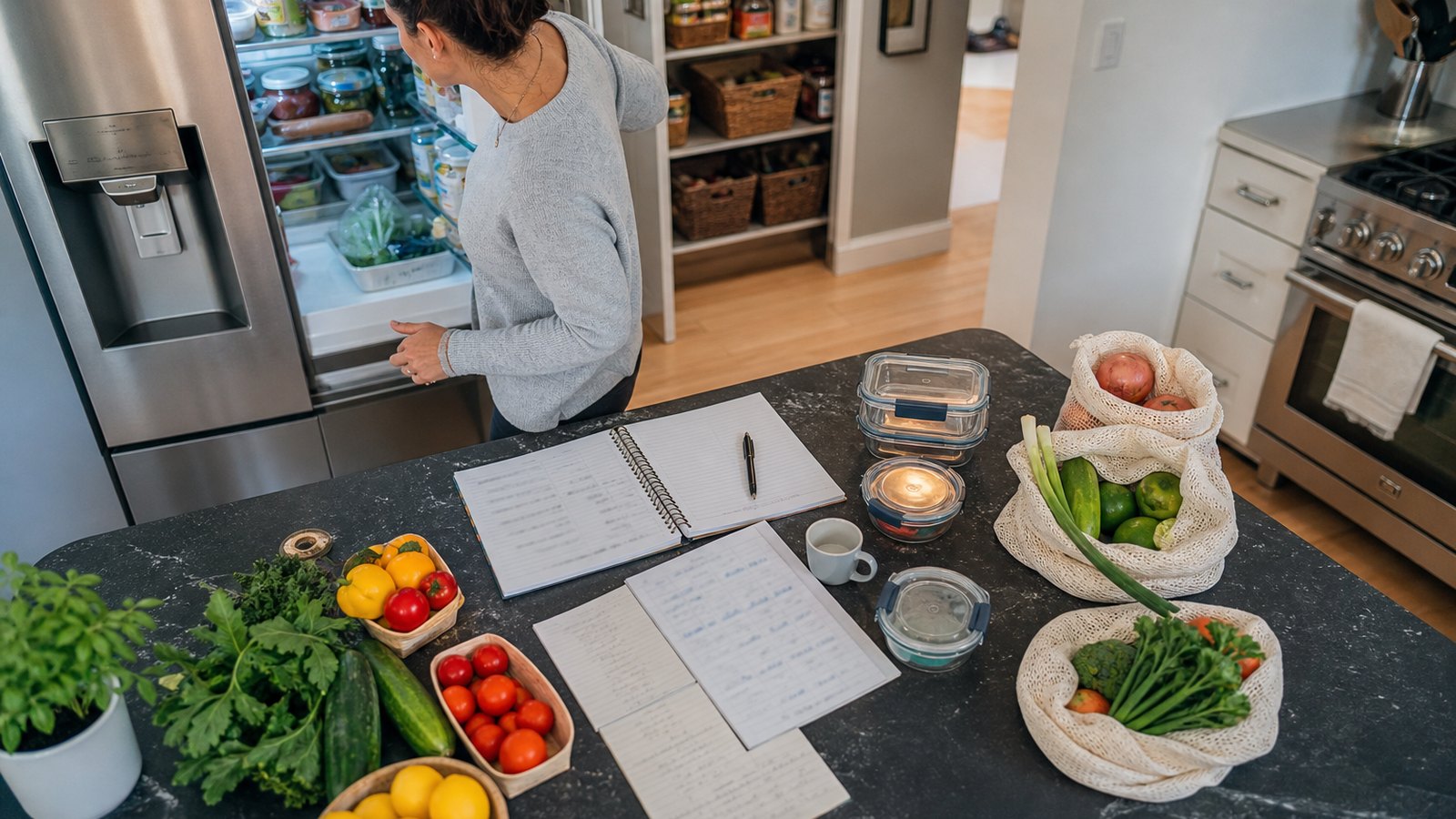
Before planning meals, scan the refrigerator, freezer, pantry, countertop, and any overflow shelf. This is a five-minute search for food that should influence the next trip.
Use four inventory questions:
- What needs to be used soon? Note soft vegetables, opened dairy products, ripe fruit, cooked grains, and leftovers.
- What is already available in useful quantity? A half-full bag of rice may cover several meals; one tortilla may not.
- What appears to be present but is nearly empty? Open containers and check staples such as oil, oats, coffee, spices, and condiments.
- What is hidden in the freezer? Record proteins, vegetables, bread, and prepared portions that can anchor a meal.
Build a Flexible Meal Map, Not a Rigid Menu
A meal map assigns roles to ingredients without demanding that a specific dish happen on a specific night. Start with the number of meals that realistically need coverage. Account for late workdays, events, leftovers, restaurant plans, and nights when people eat at different times.
Choose a few meal formats that can absorb ingredients and substitutions:
- a grain bowl with a protein, vegetables, and sauce
- pasta with one main vegetable and an optional protein
- tacos or wraps with flexible fillings
- soup using broth, beans, vegetables, and leftovers
- eggs with toast and fruit for a low-effort meal
- a sheet-pan combination of protein and sturdy vegetables
Convert the Map Into a Categorized List
Translate each meal into ingredients, subtract what the inventory showed, and add household staples. Organize the remaining list by store area rather than by recipe. A practical order might be:
- Produce
- Bakery and grains
- Canned and dry goods
- Dairy and eggs
- Meat, poultry, or seafood
- Frozen foods
- Household items
Keep refrigerated and frozen sections near the end to shorten the time cold food spends in the cart. Within each category, include the amount and intended use when that detail matters. “Bell peppers — three, wraps and sheet pan” is more useful than “peppers.” “Yogurt — breakfasts for four days” helps the shopper choose an appropriate container size.
Compare Unit Price and Labels Together
Package size can make two products difficult to compare. Use the shelf’s unit-price information when it is available, and make sure both products use the same unit, such as per ounce, pound, or count. A larger package may have a lower unit price, but that does not automatically make it the better choice. It only creates value if the household can store and use the food before quality declines.
Next, read the Nutrition Facts label. Check the serving size and servings per container first, because the remaining numbers refer to that serving. Compare products using the same realistic amount. Then review the nutrients most relevant to the household, which may include sodium, added sugars, saturated fat, fiber, protein, or particular vitamins and minerals.
Read the ingredient list for ingredients that matter because of allergies, dietary needs, or cooking function. Similar-looking products may behave differently: one tomato product may be seasoned, while another is plain; one yogurt may be sweetened, while another is not. The smarter choice balances unit price, usable quantity, nutrition, ingredients, storage space, and the meal map.
Decide Substitutions Before You Reach the Shelf
A good list includes substitution rules. Without them, an unavailable item can trigger an impulsive replacement that does not fit the recipe. Write the function of the ingredient next to flexible items: “leafy green for sautéing,” “mild bean for soup,” or “firm fruit for lunches.”
Use a simple substitution ladder:
- Choose the same ingredient in another form, such as frozen spinach instead of fresh.
- Choose a close equivalent with the same cooking role, such as kale for spinach in soup.
- Change the meal format while preserving other ingredients, such as turning taco fillings into rice bowls when tortillas are unavailable.
- Skip the item if the replacement creates waste or requires several unplanned additions.
Protect Food Safety During the Trip
Shop in an order that limits temperature changes and cross-contamination. Select shelf-stable items first, then produce, followed by refrigerated and frozen foods. Pick up raw meat, poultry, and seafood near the end. Check that packages are cold, intact, and not leaking. Place raw animal products in separate bags provided for that purpose and keep them away from produce, bread, and ready-to-eat foods.
Avoid cans that are deeply dented, bulging, or leaking, and skip jars with broken seals. Check eggs for cracked shells. Keep frozen packages that feel solid and avoid packages with signs that the food may have thawed and refrozen.
Go directly home after shopping when carrying perishables. Use an insulated bag or cooler when travel, weather, or another stop could delay refrigeration. Once home, refrigerate or freeze perishable foods promptly. Put raw meat and poultry on a low shelf in a tray or container so any leak cannot drip onto other food.
Use Checkout as a Final Control Point
Before entering the checkout line, pause for a cart audit. Match the cart to the list, confirm that must-have ingredients are present, and remove accidental duplicates. Look at produce condition and package integrity one more time. Group cold items together on the belt, keep raw meat separate, and place fragile foods where they will not be crushed.
Review the receipt before leaving or immediately afterward. Confirm quantities and product entries, especially when buying similar items. Keep the receipt until the groceries are unpacked and any concerns are resolved.
Finish With a Five-Minute Post-Trip Review
The system improves only when the next plan reflects what actually happened. After unpacking, rotate older food to the front and place newer food behind it. Update the inventory for important freezer items and staples. Put foods marked for early use in the visible “use first” area.
At the end of the week, ask:
- Which foods were finished as expected?
- Which ingredient had no clear use?
- Which package size was too large or too small?
- Which substitution worked well?
- Which meal was skipped, and why?
- What spoiled, and what planning or storage change could prevent a repeat?
Turn the answers into one adjustment. If herbs repeatedly remain unused, choose meals that share the same herb or use a longer-lasting alternative. If a large package becomes monotonous, buy a smaller amount or freeze portions immediately. If weeknight plans often collapse, add another low-effort backup meal.
A smarter grocery shopping system is a loop: inventory informs the meal map, the map shapes the list, careful comparisons improve selections, safe handling protects the food, and the post-trip review makes the next trip easier. The payoff is not a perfect cart. It is a household routine that becomes more accurate, flexible, and practical over time.
After several trips, the system becomes easier to maintain because the household can keep proven staples, adjust quantities, and remove foods that repeatedly go unused.