Receipts and warranties are usually needed months or years after the purchase, when the paper has faded and the confirmation email is difficult to find. A useful system connects five things: the item, proof of purchase, warranty terms, model or serial number, and service history.
The goal is not to save every receipt forever.
Decide which purchases deserve a record
Track durable goods, expensive items, products with meaningful warranties, home improvements, business or tax-related purchases, reimbursable expenses, gifts with coverage, and items listed in a home inventory. Examples include appliances, electronics, tools, furniture, jewelry, vehicle work, and building systems.
Routine groceries and low-cost consumables rarely need long storage once you confirm the transaction, unless they relate to a recall, rebate, reimbursement, or dispute. A written retention rule prevents the system from filling with noise.
For each tracked item, record:
- Item and brand.
- Purchase date and seller.
- Price and payment method’s last four digits if useful.
- Model and serial number.
- Warranty length and provider.
- Return deadline.
- Storage location or household member using it.
- Receipt, contract, and warranty file locations.
- Service dates and claim numbers.
Avoid storing full card or bank numbers.
Capture the receipt immediately
Thermal receipts can fade, tear, or become unreadable. Photograph or scan the complete receipt soon after purchase, including the seller, date, item description, price, tax, and transaction details needed to identify the sale. If the back contains return or warranty terms, capture it too.
Use a clear filename such as 2026-04-10_Seller_CoffeeMaker_Receipt.pdf. Save online invoices as PDFs rather than screenshots when possible, because a PDF often preserves multiple pages and selectable text. Download documents from retailer accounts before old orders disappear or the account closes.
For emailed receipts, save the attachment or print the message to PDF. Do not rely on an inbox as the only archive. Email search can fail when merchants use vague subjects, and account access can be lost.
Check image quality before discarding paper. Zoom in, confirm all edges are visible, and ensure the total and product description are readable.
Store paper selectively
Keep an original paper receipt when the seller, warranty, tax rule, rebate, or return policy requires it. Staple nothing through barcodes, security features, or information that may be scanned. Place small receipts in archival sleeves or envelopes rather than applying tape directly to thermal paper.
Create one current-year folder for pending returns, rebates, and recent purchases. Move records into longer-term product folders after deadlines pass. Large items can have individual folders; smaller items can share category folders such as “Kitchen Appliances” or “Power Tools.”
Store documents away from heat, sunlight, moisture, and chemicals.
Build a matching digital structure
Create top-level folders by category or location, then one folder per high-value product. Keep the receipt, warranty, manual, registration, photos, and service records together. Use the same item name in every filename.
A typical folder might contain:
2026-04-10_Receipt.pdfWarranty_Terms.pdfModel-Serial_Photo.jpgManual.pdf2027-01-14_Service_Invoice.pdfClaim_ABC123_Notes.pdf
Back up the archive to a second protected location. Use account security and encryption appropriate for files that reveal your address, purchases, or payment information.
A spreadsheet or home-inventory app can serve as the index, but export a copy periodically so the system does not depend entirely on one provider.
Read the warranty when you buy
The FTC explains that written warranties should be available for review before purchase for covered consumer products under federal rules.
Note exclusions and maintenance obligations. Some warranties require filters, inspections, registration, authorized parts, or proof of service.
Distinguish among:
- Manufacturer warranty: provided by the maker.
- Seller warranty: promises made by the retailer.
- Service contract or protection plan: separate paid coverage, not the same as a warranty.
- Implied warranties: legal protections that vary by state and transaction.
- Credit-card benefits: possible additional protection subject to card terms.
Do not assume “lifetime” means the buyer’s lifetime. The warranty should define whose or what lifetime controls.
Record return and claim deadlines
Warranty duration and return windows are different. A store may allow returns for a short period while the manufacturer covers defects longer.
For gifts, request a gift receipt and warranty information without price where possible. Record the original purchase date because coverage often begins then, not when the gift is opened.
If a product has a trial period, test all important functions early. Waiting until the final day can leave no time to gather packaging or obtain authorization.
Photograph the item and identifiers
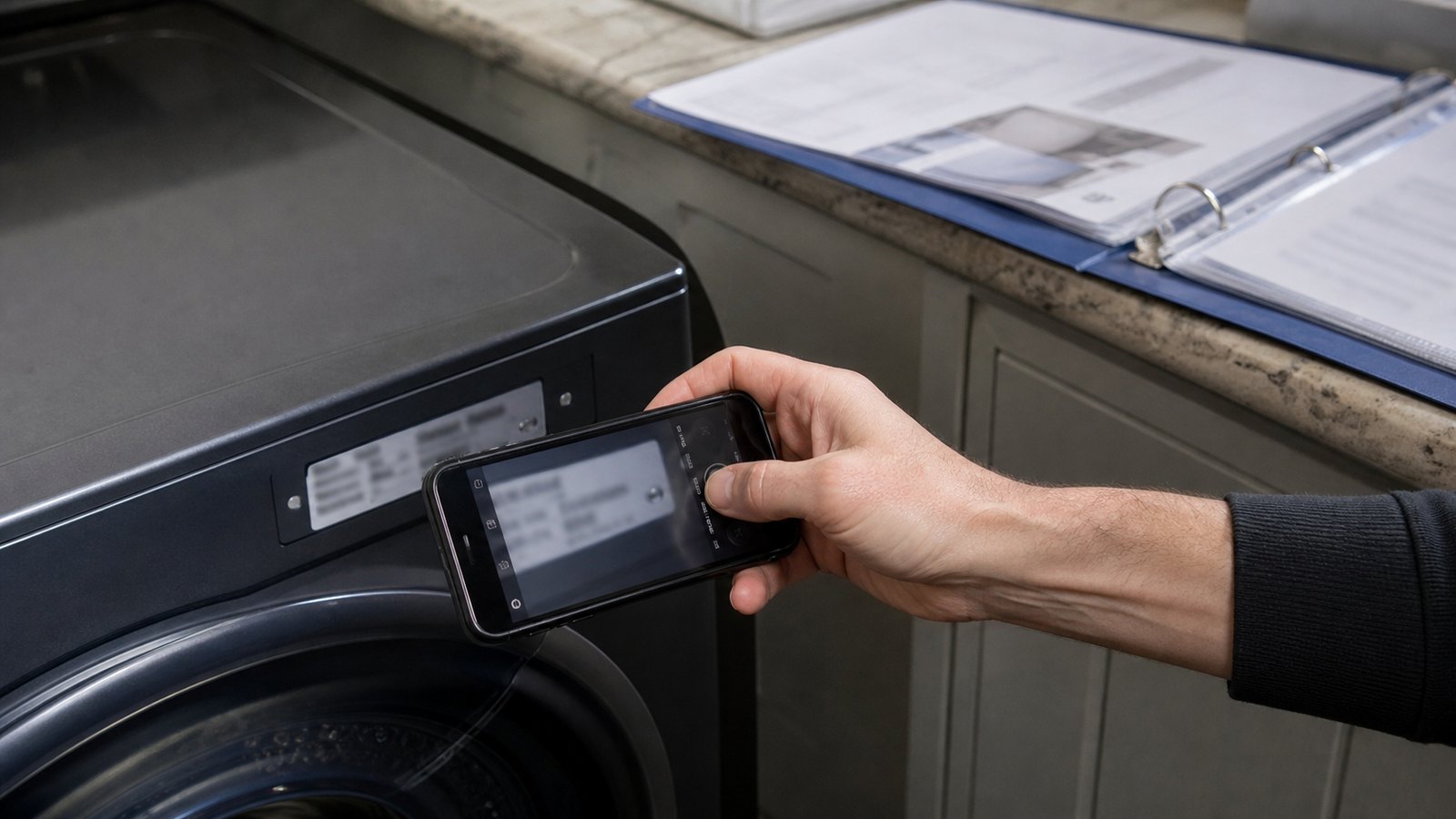
Take a wide photo of the product and close photos of the model, serial number, and rating plate. For installed equipment, photograph the unit’s location and accessible connections without opening covers. Serial numbers can be hard to reach after installation.
Add major purchases to the home inventory with approximate replacement information. These records may support insurance discussions, but coverage and claim evidence depend on the policy. Ask the insurer what documentation it recommends for valuable items.
Do not post serial-number photos publicly. They can reveal ownership details and may be misused in fraudulent claims.
Maintain a service history
Save maintenance receipts, work orders, technician notes, replaced-part details, and claim correspondence. Record dates, symptoms, diagnostic results, and whether work was covered. A timeline helps show that required maintenance occurred and prevents repeated repairs without context.
When speaking with a warranty provider, note the representative, date, claim number, promised action, shipping tracking, and follow-up deadline. Confirm important instructions in writing.
Keep replaced parts only when the provider or technician instructs you to; some claims require return of the failed part. Do not disassemble a product if that could create danger or conflict with warranty terms.
Make a warranty claim methodically
Start with the written warranty and follow its specified route. Describe the product, purchase date, model, serial number, and problem. State troubleshooting already completed according to the manual. Attach a copy of the receipt and relevant photos, not unrelated financial information.
Ask what remedy is offered, who pays shipping or labor, how long the process is expected to take, and whether replacement changes the remaining coverage. Save shipping receipts and photograph packaging for high-value returns.
If the seller or manufacturer does not resolve the issue, escalate through its written process. The FTC accepts reports about deceptive practices, and USA.gov provides routes for consumer complaints, but a report does not guarantee individual reimbursement. State consumer-protection agencies or legal advice may be appropriate.
Apply retention rules carefully
Keep records through the return period, warranty or service-contract term, and resolution of any claim.
Tax-related receipts should be kept for as long as needed under the applicable tax rules. The IRS bases record retention on the action, expense, or event the document supports; different situations have different periods. Ask a tax professional about unusual transactions.
After selling or disposing of an item, keep transfer, disposal, or claim records if they still serve a legal, tax, safety, or privacy purpose. Otherwise, remove the product from the active index.
Review the archive twice a year
During each review, process new purchases, test backups, update service histories, and identify expiring coverage. Delete true duplicates while preserving the clearest complete copy. Check pending rebates and unresolved claims.
Dispose of paper with sensitive data by cross-cut shredding.
An organized warranty archive saves more than search time. It lets you act before deadlines, present a complete claim, maintain products correctly, and know when a document has outlived its purpose. Capture once, name consistently, link every record to the item, and review on a schedule.